Heliconia Amazon River Lodge
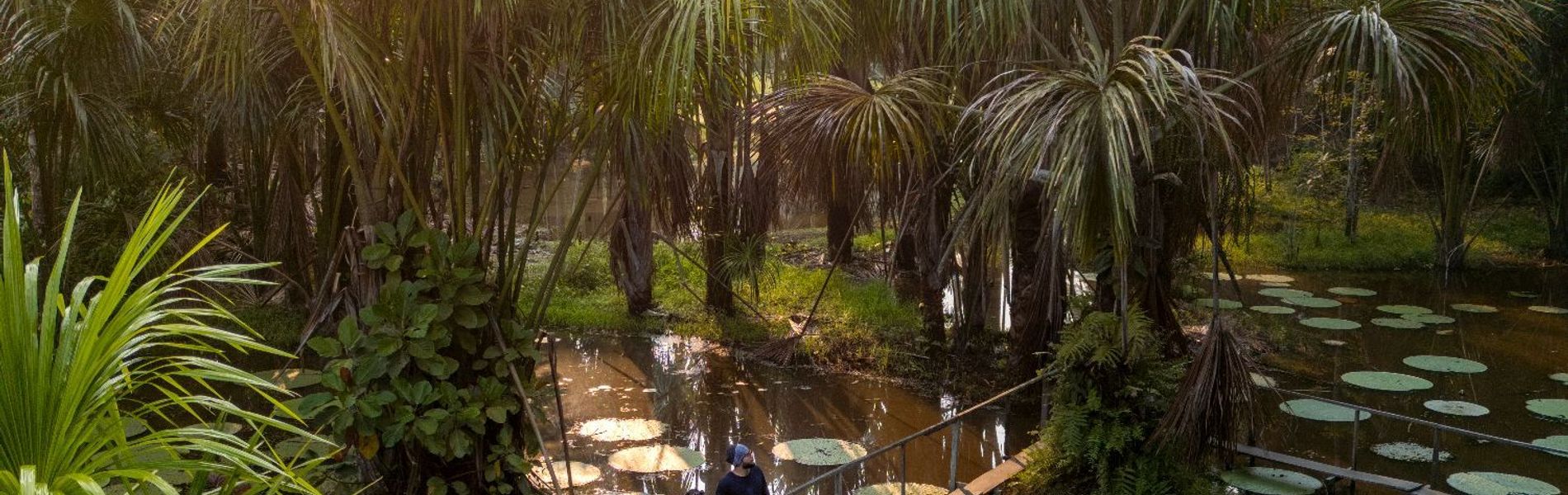

One of the most representative Indigenous communities of the Amazon.
Throughout the Amazon, there are more than 50 Indigenous communities. Near Heliconia Amazon River Lodge, you have the opportunity to visit the Yagua community and learn about their traditional way of life, culture, handicrafts, and ancestral techniques of hunting, fishing, and agriculture.
Experience the rainforest firsthand by visiting a riverside village of the Yagua people. Walk through their community, visit their homes, school, church, and small shops, and interact respectfully with local families. You will learn about their fishing and farming practices and may support their cultural heritage through the purchase of traditional handicrafts.
During this excursion, there is also the possibility of spotting pink river dolphins (Inia geoffrensis) and even trying traditional piranha fishing along the way.
The Yagua people have lived along the banks of the Amazon River since time immemorial. During the colonial period, they were influenced by various Indigenous confederations and later faced domination and displacement.
They endured raids by Portuguese slave traders (bandeirantes) and sought refuge in Jesuit missions. After the expulsion of the Jesuits in the 18th century, many fell under the control of local “patrones” who exploited their labor.
In the 19th century, they were forced to collect sarsaparilla, and during the rubber boom, the arrival of the Casa Arana brought further hardship. Although they resisted, they were eventually subdued in the early 20th century.
Subsequent economic “booms” - including fine timber, latex, and animal skins — continued to impact Indigenous populations, who were often treated as cheap labor. In 1933, a measles epidemic tragically reduced a significant portion of the Yagua population.
After 1970, the Peruvian state promoted settlement in officially recognized “native communities,” marking a new phase in their history.
The Yagua economy is based on shifting agriculture, complemented by fishing and hunting. Cassava (yuca) is the main crop cultivated in their chagras (traditional gardens).
They create clothing from palm fibers, hammocks, and intricate baskets. Today, they also commercialize handicrafts, wood products, rice, and other goods to support their livelihoods.
Yagua society is organized into patrilineal and exogamous clans, which traditionally exchange marriage partners between complementary groups, maintaining social balance and cohesion within the community.
The Yagua worship Oriknan, their supreme creator being. Shamans undergo years of training to establish contact with the spiritual world that governs nature. Shamanism serves as a system of harmony with the environment, promoting balance, health, and well-being. Rituals may last several days and include ceremonial chants performed by both men and women.
The Yagua language remains linguistically unique and is believed to have historical connections with extinct languages such as Peba and Yameo. Some scholars suggest broader relationships with other Amazonian language families, though its classification remains debated.
Visiting the Yagua community offers a deeper cultural understanding of the Amazon - an opportunity to connect not only with nature, but with the living heritage of the rainforest

...

RECOMMENDED FLIGHTS
LIM-IQT: Before 8:30 AM
IQT-LIM: After 6:00 PM
The cost of the extra boat is $180 (shared service - one way) - if the recommended flights are not used. Overnight stay in Iquitos the night before or after check-in at the lodge; disregard this instruction
...

